Thursday, 26 April 2018

Study Task 6 - COP 3 Induction: Consumer identities

  1. Science(or Psychology) vs Art & Design (how they work together - the science of aesthetic)
  2. Knowing the psychological contexts and reasoning behind how humans respond to aesthetic best helps design for its purpose / understanding of target audience / progression of informed and pleasing design 
  3. Cultural - does how various cultures have adapted different stylistic norms reflect their religious of scientific beliefs? can we translate tradition into something deeper? Technological - how has invention affected aesthetic / production / scope Aesthetic - technical terminology and characteristics of outcome 
4:*'Aesthetic' - Benedetto Croce
*Cathrine Jansson-Boyd – “Consumer psychology”
*'The sicence of art: a neurologial theory of aesthetic experience'
Authors: Ramachandran, V.S.; Hirstein, W. Source: Journal of Consciousness Studies, Volume 6, Numbers 6-7, 1 June 1999, pp. 15-51(37) Publisher: Imprint Academic


https://www.nottingham.ac.uk/humanities/aesthetics/documents/fragilityaesthknow.pdf
THE FRAGILITY OF AESTHETIC KNOWLEDGE: AESTHETIC PSYCHOLOGY AND APPRECIATIVE VIRTUES MATTHEW KIERAN
5. Leonardo Da Vinci  
- The golden ration / Fibonacci sequence 
- interviews with people and their reaction to different aesthetics / explore accepted visual literacies 
Research into hyperreality theory


Orientalism theory


Possible research question: The Science of Aesthetic
Idea: how does our external influences/ environments impact our tastes - what is the science behind our emotive responses to aesthetic (e.g. colour psychology, spaces/ architecture, materials, shape. How has the inventions of new technologies or methods impacted aesthetic through time, in the art and design world (digital design, screen based / video art, printing press and methods, sound waves etc 

Research essay:
'Aesthetic - As Science of Expression and General Linguistic'
Edited by Benedetto Croce

David Glowacki - Bristol Research Fellow (scientist, artist, culture theorist)
 https://glow-wacky.com/about/


Over the years, I’ve become increasingly interested what I call ‘the aesthetics of scientific imagination’ – i.e., the “design” decisions entailed in scientific visualization. This is particularly important in domains which cannot be seen with the naked eye, because our scientific intuition is guided by the aesthetic representations we use to imagine phenomena which are otherwise invisible. In fact I would almost go so far to claim that imagery is the reality in these domains, profoundly impacting how we communicate these ‘realities’, in both research & educational contexts. Over the last few years, my group’s work in digital art has in fact driven a range of scientific research outcomes – e.g., the algorithms we’ve designed to make artworks have been fast enough to accelerate our molecular research. I like this research paradigm, with aesthetic enquiry and scientific enquiry locked in mutual dialogue, each pushing one another into new territories.

CoP3 Proposal brief:

Does the way fiction depict the future impact aesthetic of invention?
- how does fictional representations of the future impact design decisions
- how has the development and improvement of technology effected the aesthetic of science fiction
- what does our interest in virtual reality tell us about the future of design?
- should design fear or embrace the technological world? (analogue vs digital methods of production)
  1. Title
  2. Outline the brief
  3. Background
  4. Deliverables
  5. Mandatory Requirements

Summer reading list:
  1. The Aesthetics of Ambivalence: Rethinking Science Fiction Film in the Age of Electronic (Re) Production (Contributions to the Study of Science Ficti)
  2. Echoes of the Future: Rational Graphic Design and Ilustration 
  3. The Design of Future Things - Book by Don Norman
  4. The Golden Ratio: The Story of Phi, the World's Most Astonishing Number Book by Mario Livio 
  5. Patterns in Nature: Why the Natural World Looks the Way it Does, by Philip Ball

Wednesday, 25 April 2018

Study Task 7: Project Statement

Project statement / evaluation:
The practical branding of Endure was influenced and informed directly from the conclusions drawn in the prior academic investigation. The research question explored the ways popular culture could be used as a tool for environmental and social change, with a focus on globalisation manipulating cultures, the mass media’s effect on body image ideals,
technological advances in our society, and the ways positive agendas for climate change can be promoted through use of mainstream outlets. 

John Storeys concept of 'increasingly porous territorial boundaries' and 'time space compression' set the context for an environment where popular culture is able to thrive. Levine (2002) labels pop culture as the people's responses to consumer goods, and with Jameson noting mass culture as 'sheer manipulation, commercial brainwashing and empty distraction by the multinational corporations', it is clear that producer and consumer relationships are vital to a brands success. Accordingly design and communication to a mass market is in line with the intentions of the people at the top of the production chain. The essay began to unfold the current state of the market, as well as solutions that could be made for change, concluding on the use of celebrity endorsement and the all-sharing forum of social media which has scope to provide transparency. 

Claudio (2007) states in 'Waste Couture: Environmental Impact of the Clothing Industry'
that economic growth has become dependent on the continued marketing of new products and disposal of old ones that are thrown away simply because stylistic norms promote their obsolescence. This accumulation of theory that the big corporations manipulate consumers,  the way we receive products defines pop culture, and the exposure of mass consumerism connotes a disposable culture, we begin to see an area where change is needed. 

The consumer culture and mass media also has social impacts as well as environmental, through the stimulation of mental health issues from projecting unrealistic body image ideals (in this context, models in fashion). Primary research was conducted to gain an introspection to the depth of the impact. From 50 females aged 16-25, 81% agreed with wanting 'the perfect body'. This impacted on the responsive project to acknowledge ways in preventing morphed perceptions of beauty representation, as well as how celebrity endorsement is a huge tool for influence over a populist audience (Jain, 2011). 

The practical responsive focused in on fast fashion the area of investigation. This sector is unknown by most to be heavily detrimental to the environment through its toxic waste-products and fossil fuel intense manufacturing and distributing line. This sector also overlapped with the social issues explored within the investigation, including mental health issues from body image ideals and mass consumerism. The sheer waste and disposable culture we have adapted off the back of the fast fashion industry impacts a broad spectrum of environmental and social issues our world is facing today. The brand proposal 'Endure' seeks to simply reduce the waste by bringing the up-cycling and reuse of old clothing into the forefront of commercial culture. Instead of labelling it 'vintage' or 'second-hand', the brand seeks to advertise it as environmentally and ethically conscious to appeal to a broader audience. Most sustainable fashion brands are expensive, and so this alternative appeals to the mass consumers of the 16-30 y/o demographic, by placing emphasis on reducing landfill rather than buying new. 

The branding sought to not only being sustainable in its ideology and concept, but in its design too, using as least ink as possible for its design productions. Within the brand it seeks to be 100% plastic free, using natural materials like paper wood and cardboard for its labels, signage and bags. It further addresses the social issues of today by having a 'no edit' policy for its images, and seeks to represent women of all sizes and ethnicities in its campaigning. The poster series utilises simple shocking facts to communicate the brands message in a minimal, clear and basic manner. This approach leaves no room for confusion thus using design for its purpose - here is the fact, here is the product, this is why you should buy it. The use of 'rethink, reuse, endure' epitomises this concept. 

The project also focuses on the mass media outlet that dominates our current societal structure and how social media can be used productively within this brand. The use of Depop and Instagram to spread free advertisement across huge international platforms, as well as twitter to educate its followers in exposing the darker side of the fashion industry. No other platform really exists for the transparency of this industrial sector to a mass audience. 
The branding also sought to cover design for promotional days, to further the identity of the brand. With a focus on calendar occasions like Earth Day instead of 'Black Friday' for instance, the brand presents its point of difference in the market and stays true to its intentions of fighting the disposable and ecologically detrimental nature of the fast fashion industry. 

Endure: video / gifs


The new high street brand dedicated to reducing the waste of the fast fashion industry through the up-cycling of clothing. We also promote the representation of all women regardless of size or race, and seek to advocate realistic role models for todays generation.

https://youtu.be/FBWmgNHmXmg

Earth day Gif:
Promoting Earth Day 2018 with a discount code for use on social media


Endure: Idea Refinement

Typographic Treatments

Typechoice: FUTURA


'Geometric san-serifs are in vogue this year in web and logo design (trendy & modern). Futura is a versatile, high-quality font that is almost as popular as Helvetica. If your goal is to create a design with modern, clean elegance — you can choose Futura with confidence as your typeface of choice.
Futura’s design is based entirely on simple geometric forms — triangles, squares and near-circles . The stroke weight is almost even throughout, and is distinctive for its long ascenders and almost classical Roman capitals — these elements give it its stylish elegance and differentiate it from other geometric san-serifs.

Futura can be used as a display and paragraph font and is seen in many notable and historic projects. This makes it perfect for use in the logotype as it can be adapted on a variety of platforms (headers and body text without jarring). 


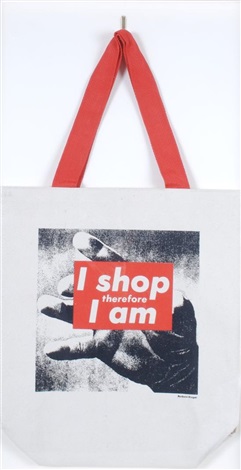
Barbara Kruger's 'I shop therefore I am' (1990) is a perfect reference point to progress the branding of Endure. 

Context:


Between the late 1970s and the early 1980s, Barbara Kruger, working as a graphic designer for popular magazines, gained recognition in the art world for photo-based images overlaid with blocks of text in a signature color scheme of black, white, and red. Her practice of culling and editing found photographs and of pairing them with phrases in provocative ways was informed by her interest in feminism and critical theory. These investigate the ways in which ideological messages infiltrate daily life by means of the mass media today.

Barbra Kruger's photograph gives representation to consumption in terms of the literal meaning of the word. By displaying the words, "I Shop Therefore I Am," Kruger is making a statement in regards to material consumption. The open-ended statement allows the viewer to re-think materialism.

Application:

The ways in which this graphic has been reproduced and distribution on an array of products presents its malleability with infiltrating pop culture and fast fashion with a political drive. This is a great representation of how the brand can be developed.


Imagery experimentation

Taking images of clothing examples to present the brand as keeping up with the styles of the fashion world despite its point of difference. The focus was to be on the clothes rather than the models face, as well as normalising realistic depictions of women. The photos were not edited to keep inline with the brands ideology and intentions. The variety of styles seeks to cover the populist target audience. 

Endure: Production

Logotype

Short Ad video for Social Media

The design progressed to develop an advertising gif video that could be used on social media platforms to share and promote the new brand internationally. The instant distributing and all-sharing nature of the internet means bold, clear, to-the-point design best captures the attention of its audience. The clothes are aimed at the 16-30 y/o bracket and the focus away from the models face and onto the clothes successfully steers away from idealistic representations of women. Furthermore the photos were unedited to adhere to the ideology of the brand. 


Music was then added to add a professional flair and youthful zest to the brand.


Signs / Storefront

note: would be a lot bigger stores but wanted to capture how the design could look in this context, with black and white variations. Additionally seeing how the logotype could look in 3d was important to visualise, as having the design laser cut out of wood could like really effective, focusing on natural materials.


Bags, Labels & Tags


Social media platforms


Advertisement posters


Endure: Initial Ideas & Development

Logotype:
The initial sketched explored ways the word can be manipulated through layout and image to best translate its meaning. Communication of the concept is important for the success of the brand. 


Refined logotype considerations:


Final 3 presented for peer critique:

1. 
2. 
3. 

Feedback and final decision
  • 3 is most elegant and feminine for target audience
  • 1 resembles too much of a battery / power style company
  • Can see 2 in the market / on oxford street
  • 3 is subtle 
  • Like the outline idea to reduce print waste 
  • good linkages and use of concept through type
  • 3 is most inviting 

Colour palette
The colour wanted to be as minimal as possible, using only black or white when necessary for the branding. Colour could then be applied when necessary with the fashion photography and advertisement schemes. 

Imagery 
The design experimented with digital drawings of earth to see how the brand could visually depict its healthy environmental goals.


Social Media Gif
Lo-fi style experimental design depicting an idealistic world vs its destruction for digital use - rejected as wanted to stay positive and influential not silly


The motion graphic then looked at more ambiguous ways of presenting this idea. However after peer review it was clear these looked significantly too unprofessional to feature in the campaign.

It then started again, looking to remain as minimal as possible. The outcome is a nice touch and could be used on for instance, 'Earth Day' to promote the brand with discounts and so on. The malleability of this concept means the design can keep up-to-date with current trends by simply changing the background imagery to relevant depictions, colours and shapes. 


Poster design
Looking at type layout and colour options - inspired by 'I shop therefore I am' 
Images could then be a=layered underneath with the text taking away from the image and so on. 
   

After this was trialled it appeared too unclear and messy. So another approach was needed to be sought after.


Tuesday, 24 April 2018

Endure: Design Development

Poster / Advertisement Design

Collecting shocking and facts about the environmental and social impacts of fast fashion to shock audiences through poster advertisement campaign for the brand. 

1. 80 billion pieces of clothing are consumed globally every year.

2. The volume of water consumed by apparel production each year is currently the equivalent to 32 million Olympic swimming pools.

3. One-in-six people work in the global fashion industry.

4. The US spend an estimated $2.6 billion on Halloween costumes every year: worn for one night only. Try homemade approaches?

5. Two thirds of all fibres used to make our clothing are cotton based. Cotton uses a vast amount of water to grow, placing substantial strain on the environment.

6. 250,000 Indian cotton farmers have killed themselves in the last 15 years due to the stress of debt they accumulated through buying genetically modified cotton seeds to keep up with demand.

7. Approximately 7,000 litres of water are needed to produce one pair of jeans (the amount of water one individual drinks in 5-6 years).

8. The wages of workers in garment factories can be as low as US$1-$3 a day.

9. Using the toilet during a 10 hour shift in a garment factory can cause major uproar from managers.

10. Fast fashion brands put out new collections every week or month to make it seem like your wardrobe is all off trend. This is the reason you sit and stare at your full wardrobe thinking you have nothing to wear.

11. Only 10% of the clothes people donate to thrift stores or charities get sold, the rest goes to landfill.

12. Compared to 16 years ago (2002), the average person buys 60% more clothing and keeps them for half as long.

13. A top corporate CEO earns as much in a year as 10,000 garment workers earn in Bangladesh.

14. Women wear a garment, on average, 7 times before throwing it away

15. Clothes made from polyester can take up to 200 years to break down

16. Farmers close to garment factories can predict the colour of a season by seeing the colour of the water ways and rivers nearby.


Gathering Imagery:
The design used a model to wear second hand clothing that seemed as new and fresh as high-street brands. The idea was to capture an everyday young woman 


The design wanted to show the dark side of fast fashion whilst also implying that it is not necessary to only buy ethically sourced and expensive material clothing, but that by buying second hand / up-cycled clothing one can still make a positive change and contribution to environmental developments. This is encompassed into the slogan 'Reuse, Rethink, Endure'.

Poster Design
In-keeping with the brand, Futura was used for the body of text with uppercase lettering and wide kerning of +50 to make the statements bold and impactful. 
The colour was swatched from the clothing itself but also remained consistently a dull pastel shade to keep coherency amongst the poster series.
The main logo was subtracted from the images themselves to reduct ink printing waste yet still maintain an elegant and contemporary logotype. 

Outcomes:


In Context:
The design would be advertised at bus stops, tube stations, billboards, and so on. The simple brand is neutral in design, clean and current. Its simplicity allows it to be considerable malleable with the progression of the brand.